How can you rapidly increase your writing skills and become more persuasive while catering to your audience? Copywriting.
Copywriting is using your words to sell, persuade, and articulate your thoughts. This week I started the copywriting module, which started with me learning about what copywriting is and studying different examples of good and bad writing.
Watch this video to get a summary of this post.
What is Copywriting?
Copywriting is the art of using your words to sell. It is used to persuade and sway opinions. You can use it to articulate yourself and be more appealing to your readers. Above all, it is creating words that compel you to keep reading.
Benefits of Strong Copy
Copywriting isn’t just about ads. When you understand copywriting you can—
- Articulate yourself clearly
- Understand how people communicate
- Learn how to make your writing stand out
- Help comfort friends and family in difficult situations
- Create engaging emails and marketing content
Copywriting is all around us, both strong and weak. I didn’t want to fall into the “weak” category. So, I started exercising my copywriting skills.
Over this month I honed my skills by creating—
- A swipe file full of world-class copywriting examples
- An email copywriting case study
- A welcome email
- A website case study
- An advertisement mockup
- This packaged presentation of all my work
This is how I did it.
Improving Copywriting Skills
For the first step in improving, I studied and recreated this advertisement from Rolls-Royce.
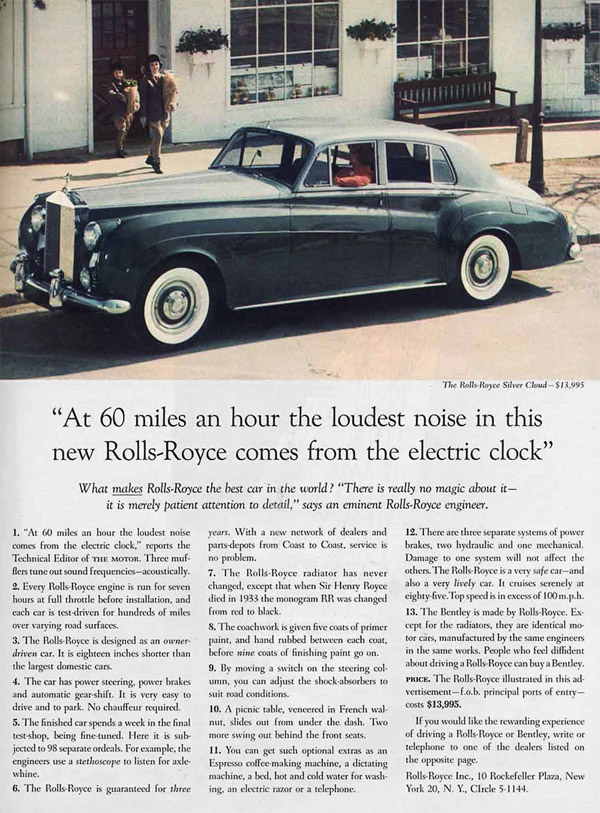
The ad catches the reader’s attention immediately with its headline. The strong mental image it creates draws the reader in immediately. It follows this up with a strong compliment from a reliable source and a specific call to action. Combined, these elements create compelling copy, which I recreated.
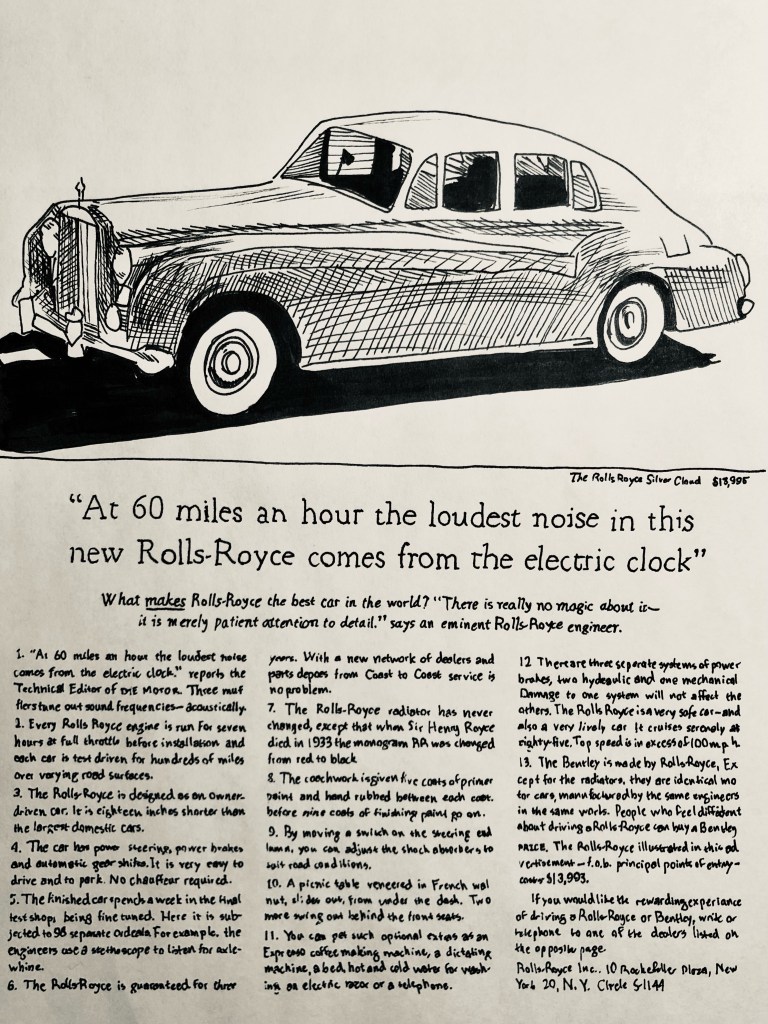
One of the best ways to improve your copywriting is by studying old advertisements and copy. By studying what has worked in the past, copywriters have created guidelines or laws that anyone can follow to write effective and clean copy. Dave Gerhardt, a skilled marketer, author, and copywriter has ten main laws.
Dave Gerhardt’s 10 Laws of Copywriting
Law 1: You must learn how people make decisions.
Law 2: You must uncover the selfish benefit.
Law 3: You must learn how to tell a great story.
Law 4: You must write like you talk.
Law 5: You must use their words, not yours.
Law 6: You must write short, choppy copy.
Law 7: You must be specific.
Law 8: You must nail the headline.
Law 9: You must back everything up with social proof.
Law 10: You must address objections upfront.
These laws are focused on marketing copy but can be applied to any piece of writing to make it more compelling.
Analyzing Emails
Using these ten laws, I scrutinized two newsletter welcome emails. How effective were they at getting their point across? Did they use strong or weak copy? What about the subject line? Did I want to open it?
I could see the style in tone between the two of them. The first email I studied was more formal, while the second wasn’t formal in the slightest. They both presented their intended purpose well. Both of the emails had a strong call-to-action and used a video to reinforce it. The CTA here was adding their email to your contacts so that it wouldn’t end up in the trash. You can read my insights and the emails here.
Using these discoveries, I created a better welcome email for my newsletter. I added personable touches to the active voice, outlined the purpose, set expectations for delivery, and broke up the text with images. The full email is here if you’d like to see it.
Web Copy Breakdown
Here is a video of me breaking down the copy on the HubSpot Academy Homepage.
Rewriting My Old Copy
To show my improvement, I took fictional letters I wrote last year and rewrote them using stronger copy.
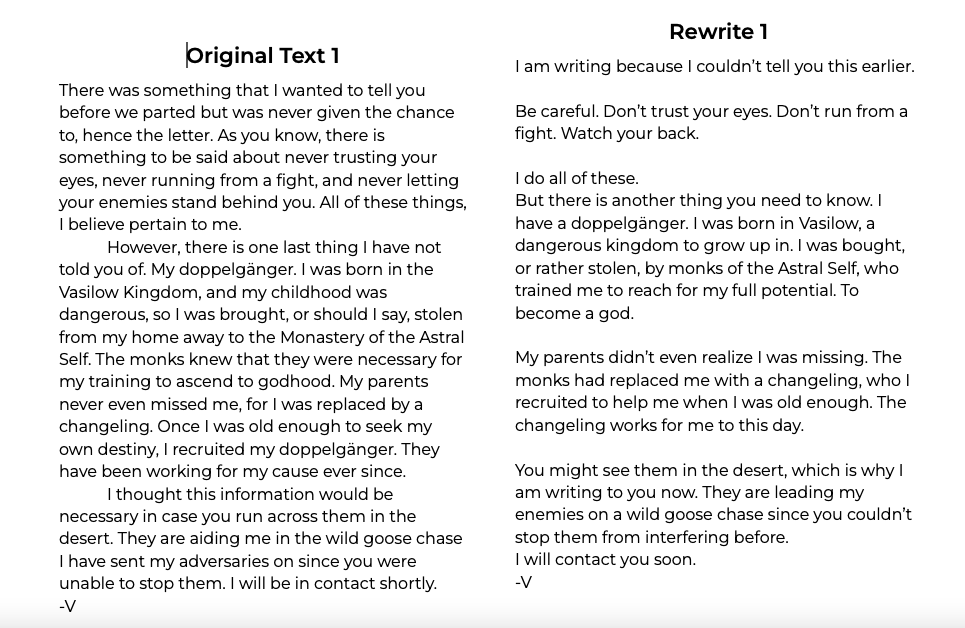
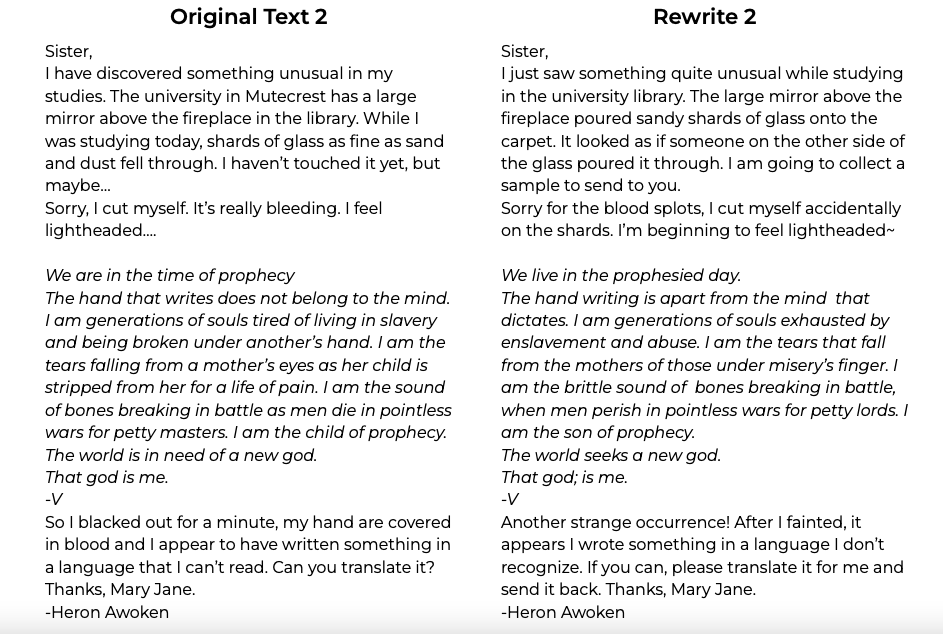
The old copy was very wordy and hard to digest in comparison with the new. This exercise helped me to cut unnecessary words, and make my meaning clearer.
Creating Simple Ad Copy
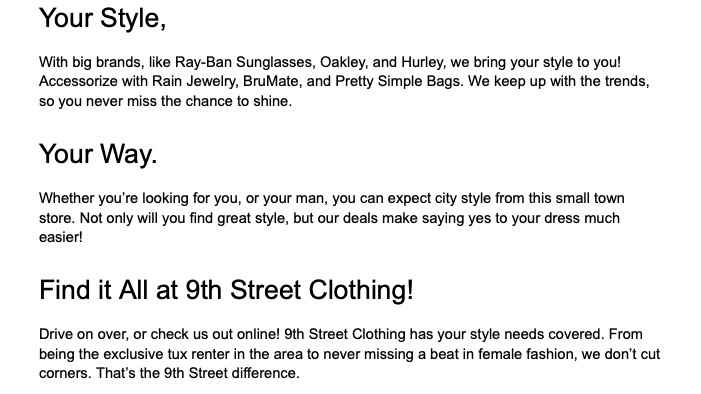
Applying my skills, I wrote up a simple advertisement for a local clothing store. I made it scannable, created a vision of a better future, and used specific examples as to why this store is the best to choose from. I employed a specific call-to-action and used the social appeal that big brands give.
Conclusion
In conclusion, copywriting is an important skill to have both for business and for life. It can be used in so many different ways. Used by great authors of their time, such as Thomas Jefferson and Alexander Hamilton, copywriting has been around for a while. Whether you need to write a difficult email or a show-stopping ad, you can apply the laws of copywriting and make it that much better. So what are you waiting for? Put the pen to paper and start using copywriting to improve your communication today.

Thanks for reading!
 Genuine Gwyn