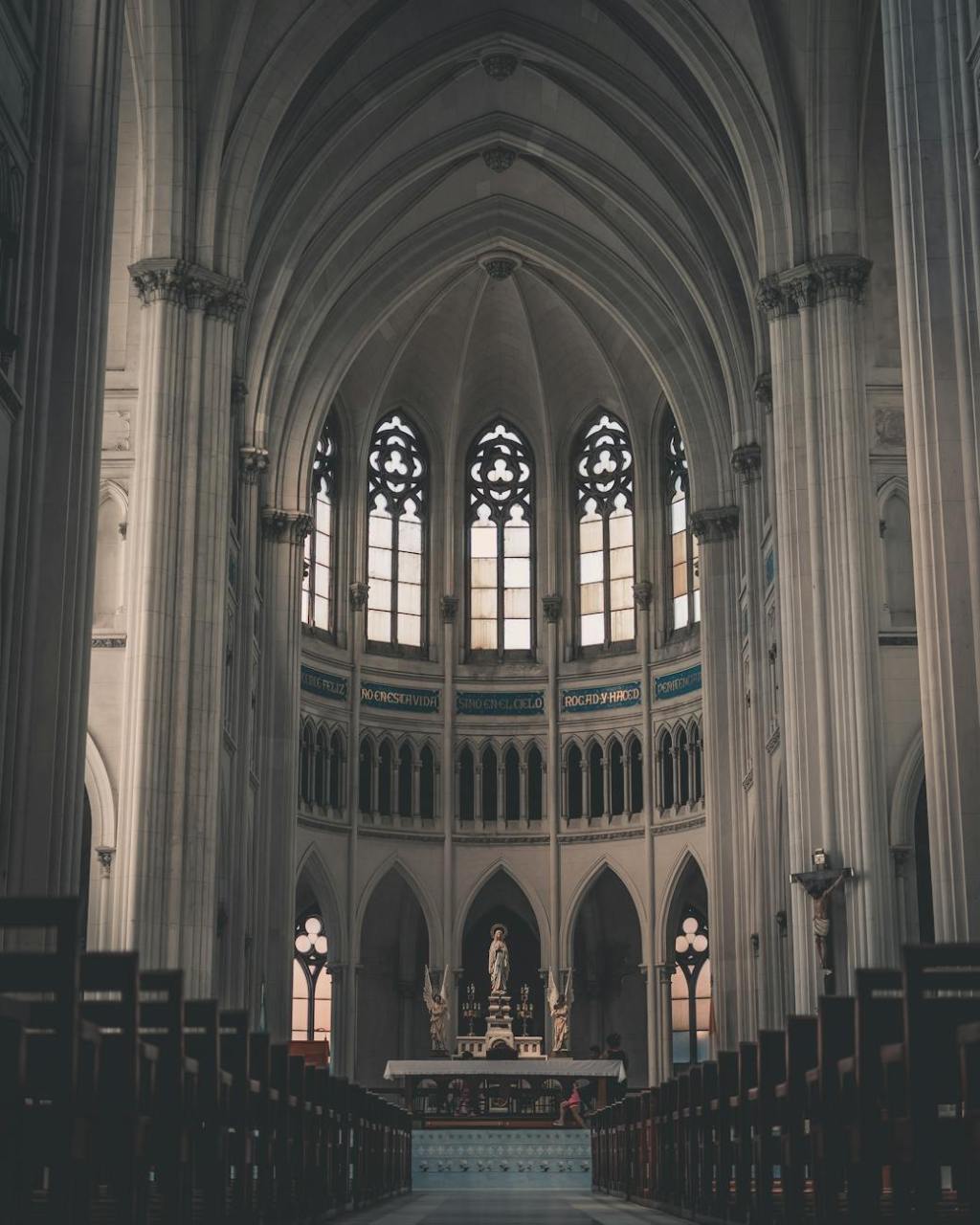
Last night I had the pleasure of attending a traditional Latin Mass. Because I’ve been learning Latin for the past year, I wanted to see how much that would carry over into the service. I’ve never been to mass since I’m reformed, but I love learning about the historical, scientific, and cultural impacts that the Roman Catholic church had on the world.
There are two types of mass, both of which are valid forms of mass. I have never been to a Novus Ordo or New Order Mass. The structure of the two is very similar, but from what I’ve read the Novus Ordo simplifies the liturgy, and the language of the area is used instead of Latin.
Since I have only ever attended a Traditional Latin Mass, and then just once and without any music, as some TLMs have, I’ll be detailing what that mass was like, and that one alone. Disclaimer, I am not a Roman Catholic, so anything that I might have misinterpreted or misunderstood would be due to that.
The Introduction to the Traditional Latin Mass
The savory incense teased the air around me as I entered the church. A statue of the Blessed Mary greats me, holding out a bowl of holy water, to purify the person who enters when they make the sign of the cross on their forehead, and to remind the person leaving of their baptism.
The sanctuary is quiet. I take one of the books bound in red, which has the Latin liturgy and English translation printed side by side. People kneel towards the altar and make the sign of the cross as they enter the pews. Sitting near the back, I listened to the priest describe the Latin Mass and how he started doing it. He speaks for an hour, describing the timelessness of it. Many of the women are veiled, a symbol of their sanctity as mothers. A connection to the mother of our Lord and her own veils.
Beginning of Mass
Silence. Except for the eighty humans breathing in the incense, there are few sound-absorbing materials. The first fifteen minutes of mass are to be spent praying. Preparing. The priest prepares the eucharist and the people prepare themselves. It is quiet, contemplative.
The priest comes out and prays at the foot of the altar. The people stand and recite the Kyrie, which is the only part of the service done in Greek. Nine times we ask for mercy. Because we are in the season of lent, the hymn of praise is omitted. The priest prays the opening prayer. Nearly everything is done facing away from the people and towards the altar. The service is not focused on the people but on God. We are being led by the Priest towards Jesus.
The priest reads a passage from the New Testament in Latin. I believe it was from Matthew, detailing how Joseph took on the responsibility of being the earthy father of Jesus. The congregation responded by chanting a short hymn. Our collective Latin was choppy, but the heart was there.
The priest then gave a teaching from the passage in English. As he said, Joseph was given the two greatest blessings that God could have given anyone. He had the Christ for a son, and the Blessed Mary for a wife. Since Catholics believe that Mary was sinless, the priest joked that if anything went wrong in the house Joseph would have been blamed for it.
Credo
Formulated at the First Council of Nicaea in 325 AD, the Nicene Creed was created to define the essential Christian doctrines, establishing the definition of the Trinity and the divinity of Christ. One of the most unifying statements of the Christian Faith.
“I believe in one God, the Father Almighty, Maker of heaven and earth,”
Symbol of Unity: Despite differences among Christian denominations, the Nicene Creed remains a unifying statement of faith, emphasizing foundational beliefs shared by the majority of Christians worldwide.
Credo in unum Deum,
Patrem omnipotentem,
factorem caeli et terrae,
visibilium omnium et invisibilium,
Et in unum Dominum Iesum Christum,
Filium Dei unigenitum,
et ex Patre natum, ante omnia saecula,
Deum de Deo, lumen de Lumine,
Deum verum de Deo vero,
genitum, non factum, consubstantialem Patri:
per quem omnia facta sunt.
Qui propter nos homines et propter nostram salutem descendit de caelis.
Many followers of Christ have used these words to describe their faith. Multitudes. They unite across borders, languages, and denominations. Second to the Bible, they unify the church.
I believe in one God,
almighty father
maker of heaven and earth
of all visible and invisible
And in one Lord Jesus Christ,
the only begotten son of God
and begotten of the Father, before all ages,
God from God, light from Light,
true God about true God
begotten, not made, consubstantial with the Father:
by whom all things were made.
He came down from heaven for us men and for our salvation.
Offertory and Canon of the Mass
Turning back to the altar, the priest begins the preparation of the gifts, including the offering of bread and wine. The congregation waits. Silently the priest says the secret prayer, expressing the intent of the sacrifice. The bread and wine are consecrated.
The Pater Noster is said. “Our Father, who art in heaven-“
The people are suddenly signaled to come. Row by row, pew by pew, the people stand and go to receive the body and blood of Jesus. Kneeling in front of the priest, each practicing Catholic takes the eucharist on the tongue, from the hand of the priest. Those who are not baptised, in the right standing of grace, or not practicing Catholics stay in their pews, or cross their arms over their shoulders while kneeling are blessed by the priest.
They partake in a spiritual communion. I do as well.
The priest says a final prayer, which summarizes the theme of the Mass. Finally, he blesses the congregation sending them forth to love and serve the Lord.
The people exit in silence, kneeling and crossing themselves as they leave the pew. But it is all silent. Many of the prayers from the priest were quiet. Much of the liturgy is not spoken aloud.
It is sacred silence. It is greater than the individual. It is a prayer, in and of itself, to God.
Final Thoughts
It feels wrong to express my opinion on the mass, especially because so little of it is about the participants. It’s not up to me how I feel about it, because in the mass the individual is not important. God is.
I respect the Traditional Latin Mass. Connecting with the multitudes of others who have used the very same liturgy to connect with God is an irreplicable experiance. Who am I, only a parial participant in the liturgy to critique it.
There are things that I found did cause mental pushback. This however, is not the post to delve into them, partially because I am still inadequately informed about the significance of the tradition and the theology behind it, and partially because I want to highlight the sacredness and timelessness of the Traditional Latin Mass.
Thank you for reading.
 Genuine Gwyn
Leave a comment