
The Problem
1The Hebrew word that we most often see translated as sin is very interesting. The word, khata, means to miss the mark. Think of an archer missing the target that they’re aiming at. Or a person on a trip losing their way and “missing” their destination, which happens to me way more than I’d like.

So, in the Bible, sin is a failure to fulfill a goal. It’s missing a mark. But what is the target that the Christian is aiming towards, you might be wondering.
In Genesis one we learn that every human is made in the image of God, a sacred being who represents our Creator and is worthy of respect. Later in Matthew 22, the religious leaders are trying to trip up Jesus and catch him in a trap so they can discredit His teaching. And so they ask him:
“Teacher, which is the greatest commandment in the Law?”
Jesus replied: “‘Love the Lord your God with all your heart and with all your soul and with all your mind.’ This is the first and greatest commandment. And the second is like it: ‘Love your neighbor as yourself.’ All the Law and the Prophets hang on these two commandments.”
Matthew 22:36-40
The Law
I want to focus on the last part of his statement- “All of the Law hangs on these two commandments.” Some fun trivia for you; in the Jewish bible, the Tanakh, there are six hundred and thirteen commandments or laws that the people had to follow. Six-hundred and thirteen! Can you imagine having to follow that many religious laws, not even political, just the laws of your faith? And what was their purpose? Why were there so many?
Though times and customs have changed, God’s law served as a bedrock of guiding ideals to help the people of God (both then and now) live in such a way as to love God and love neighbor. But what do all these laws have to do with khata? They show us our mark. They show us what we have to do. They show us that to khata is to fail at fully loving people and fully loving God.
Remember where it says that if we break one part of the law, we are guilty of all of it? This is why. Because if the law is there to help us love God and each other, breaking one part of it defeats that entirely.
The Law shows us where we fall short, where we miss the mark, where we go off course. It’s there to show us where we are sinful and selfish, only looking out for our own interests. It’s a goal we can not live up to.
Because we are slaves to our sin. Literally incapable of saving ourselves.
The Solution
Which is why it is so, so good, that we don’t have to. Because, as I’m sure you know, Christ already did. To khata was not a part of his nature. He never missed the mark, never missed the goal. He succeeded where we could not and obeyed God and loved people, even to the point of a terrible, terrible death.
Salvation happened two thousand years ago on a cross. The New Testament describes salvation as a past act, a present process, and a future arrival point. It’s about entering into a life-giving, Kingdom-building relationship with Christ.
“Getting saved” is like getting married. Salvation begins with a pledge and it grows as one lives out that pledge day by day.
When Jesus was eating at the last supper He offered His cup to the disciples. There was a Jewish custom that when the groom was proposing to his bride he would hold out a cup to her and if she took the cup and drank it, she was saying yes to marrying him. After she agreed he would go and prepare a place for her, somewhere to live, a home. When he was finished he would come back and marry her and take her as his bride.

When Jesus offered the cup to his disciples at the Last Supper, he was saying are you willing to “marry” me, in a sense. Not in the literal way that we think of marriage, but in a spiritual way. In the sense that Jesus was asking them to commit fully to Him.
That was the last meal Jesus had on earth. We are all offered this metaphorical cup of marriage. The church is the “bride” of Christ, betrothed to Jesus. This begins with taking the cup and drinking it to the dregs. We grow as we live this pledge out, this commitment, every day — the bride “making herself ready.” And someday our groom will come back for his bride and we’ll enjoy the marriage eternally.
The cup also holds another meeting. When Jesus was in the garden of Gethsemane hours before his trial and death, He asked His father to take the cup from Him, this cup being the cup of the suffering he would endure. As Christians, we are called to take up our crosses and follow him. The cross was part of his cup. And it’s part of ours too.
Taking the cup and drinking it acknowledges the pain that following Christ brings. And don’t get me wrong there’s going to be pain for people who don’t follow Christ, too. The difference between them is that we have a good, good God who knows exactly what we’re experiencing, has gone through pain just like we have and who’s there to take care of us. He’s there for us. That’s why the cup is so good because it’s not just the suffering it’s the salvation, it’s not just the pain, It’s the connection to God, and that’s why the cup is so good and so terrible all at the same time because it’s a promise and that promise will be fulfilled for everyone who takes it. The persecution for a short while and then the joy of eternity with God.
Assurance of Salvation
How do we know that we’re saved?
Assurance of salvation can be found throughout the Bible and is a promise for all believers. First, the Bible teaches that salvation comes through faith in Jesus Christ. The book of John, assures us that whoever believes in Jesus shall have eternal life with Him. We are all on the road to God, every Christian, Muslim, Satanist, and even atheist. The difference is how we meet God at the end of it all. Will we meet Him as a friend and savior, or as a person under the law? Remember the law was there to show us where we fall short, and if you aren’t under the grace of Jesus you will be judged according to the law.
The Apostle Paul, in his letters, emphasizes that salvation is a gift of grace, not earned through works. Assurance rests in the unchanging nature of God’s promises; when we trust in Jesus and acknowledge His redemptive work, we can have confidence that our salvation is secure.
We can change, but God cannot, which is why He is the one who saves us.
Finally, the presence of the Holy Spirit in a believer’s life serves as a tangible assurance of salvation. The Holy Spirit is the seal and guarantee of our salvation. The indwelling of the Spirit changes us–our character which can be seen by our love, joy, peace, and self-control. These changes are not the result of our effort alone but are evidence of the Spirit’s work within.
Freedom
There are a couple of different types of freedom we gain once we’ve accepted Jesus. Freedoms from things–think the freedom from preventable harm or laws that protect us from unnecessary danger, and freedoms to things–like the freedom of speech.
We Gain Freedom From
Our Sinful Nature
From the beginning of our existence, we are sinful. Our human nature is incapable of doing good. We are enslaved to our desires and we are enslaved to our thoughts. There is nothing that we can do ourselves to get out of this enslavement.
We are totally incapable of freeing ourselves.
The world says, “Do whatever you want that’s freedom”, but it’s not, in fact, it’s slavery but they just can’t see it. It’s not freedom to do whatever you want, because you’re not doing whatever you want. You’re doing what your sinful self wants, your desires are enslaving you.
When we are saved, we don’t have the same innate desire to sin. Of course, it still feels like it’s there because our flesh is still a part of us. Our flesh is still sinful, not our souls, our souls are clean.
One way to think about it is like this: Our bodies don’t go to hell, our souls do, so, of course, the flesh is going to do whatever it wants to because it’s not going to have to deal with the consequences of its actions. The joy of Christ is that He helps us to be cleansed and makes our hearts new and erases the punishment that our flesh would bring upon us. Our flesh doesn’t have to control us anymore. We can be free from our nature.
The World
Through Jesus, we gain freedom from the world. In our daily lives, the world often pulls us towards temptations – the pursuit of power, material wealth, and fleeting pleasures. Jesus’ teachings show us how to navigate these challenges. Jesus, having faced his own temptation in the wilderness, sets an example of resisting worldly allure.
One of the most tempting things the world offers is belonging.
Every person wants to belong, it’s biologically, emotionally, and spiritually woven into us. But often, we get lost chasing down belonging in places that won’t permanently satisfy. Sometimes we look for belonging in our friend group, through a sport, or even online. None of this is bad, by any means, but if we’re looking for those people, those groups to define us, eventually they will fail. Friends move or hurt us, and our groups might exclude us or fail. But Jesus never will.
Jesus’ teachings emphasize a life grounded in love, humility, and service to others, offering a way to break free from the grip of worldly desires. Through faith and connection with God, we can find the strength to overcome these temptations. By following Jesus’ path, we are liberated – free from the trappings of materialism, ego, and self-centered pursuits. We find our belonging in Him.
The Satan
For our struggle is not against flesh and blood, but against the rulers, against the authorities, against the powers of this dark world and against the spiritual forces of evil in the heavenly realms.
Ephesians 6:12
In our salvation, we are free from Satan. Satan is our adversary. He hates God so much that he had Jesus killed. Just like we discussed earlier, every person is made in the image of God, and so Satan hates everyone, including you and I. Satan literally means adversary or accuser, and he lives up to that fully.
He, along with our own flesh and the world around us, tempts us into sin, and then, when we fail, he piles on the guilt. “You’re not good enough. Your sin makes you unlovable. God wants nothing to do with you.”
But we can have freedom from this guilt. There’s a big difference between guilt and conviction. When we sin, the Holy Spirit, through our conscious, will convict us that what we have done is wrong, but unlike guilt, which ends with us feeling completely and totally dejected and doesn’t change our actions, conviction is followed by repentance.
To repent means to turn away from what we’ve done. It is being compelled to change our behavior. Instead of staying in our guilt and shame, it is turning to God. There is nothing you can do that will make Him reject you.
Through our salvation, we have freedom from slavery to our sin, the world, and Satan.
Enslaved people think, “It’s all about me.” Liberated people focus on others.
Next, we’ll focus on the freedom to things.
Freedom To
- Assurance of our Salvation
- Know God’s Person
- Connect to the Creator
- Find our True Purpose
Know God’s Person
Reading the Bible can often feel like a drudge, and this can be due to a couple of different reasons. The first is again, Satan’s influence. He doesn’t want us to interact with the scriptures because our awareness of his schemes makes it that much harder for him to succeed.
The second is because we’ve learned, or started treating Bible reading like a chore instead of the holy, joy-inspiring, words of the Lord that they are. They aren’t there to be a drag but to lift us up.
The Bible is a powerful source of comfort and inspiration. It guides us through tough times, offering encouragement and uplifting stories like those in the Psalms, Joseph’s journey, or Job’s resilience. Taking joy in the Word involves regularly reading and reflecting on passages that resonate with our situations.
The Bible is full of promises of God’s love and grace, bringing joy even in difficult times. Sharing and discussing the Word with a community of believers enhances the sense of joy and encouragement. By internalizing these teachings, we can experience a lasting joy rooted in the unchanging truths found in the Word of God.
Connection with God
2Do you ever have someone who only talks to you to complain or rant about how their day is going or when they need something and won’t let you get a word in edgewise, and when they’re done they just leave?
Sometimes I think that’s how we treat prayer.
And if you’re like me, sometimes prayer can fall into four different categories. Either it’s dry and stale like a bag of chips that have been left open too long, or it’s like a broken record, the same things over and over and over again, or we treat God like a giant vending machine in the sky, just there to do what we want, or worst of all, praying becomes an irritation. A chore.
Whatever it is, we’re going to stop praying, and once that happens, it’s like when you stop watering a plant. Our faith dies.
It’s hard to describe prayer with just words. So I’m going to use a picture. This is prayer to me. This picture will make more sense as we go on, but one way you can think about it is like this, a mutual outpouring of one heart to another until the two become one.

And one of those hearts happens to be God’s.
There are three ingredients needed to make prayer, prayer, and if any of them are missing the whole thing falls apart.
The first ingredient is Presence. Have you ever been alone in a room, and had someone enter behind you? Maybe you didn’t hear them, but you just can kind of tell that they’re there. You can feel their presence. This is the start of all prayer, being aware of the other presence in the room, or else we’re just talking to ourselves in the dark.
Heart. God hears our hearts. Not our words. God hears our hearts. Not our words. So we can forget about saying the right thing, and just get down to the core–what’s going on in our hearts? If we can speak heart, we can speak God’s language. We don’t have to speak out loud when we pray, because we know that Jesus is interceding for us. He’s speaking our hopes and our pains. He hears our hearts. And flipping that around we have to learn to listen to God’s heart, and not for any feelings or words or signs. We’ll see it in subtle movements or inspirations or ah-ha moments of clarity in our souls.
Trust. Remember those old diving suits where the guy at the top had to pump all the air to the guy at the bottom, and he wanted to come up, he had to tug on the rope and hope the guy at the top noticed? The point is, if you’re the guy at the bottom, you have to entrust your entire life to the guy at the top. Even for your very next breath. In the very same way, we have to have that radical trust in the guy at the top. But here’s where that analogy breaks down.
Because it’s not just some guy, it’s the God of the universe who loves you and me more than we can comprehend. The One who crafted every star, every cell, every atom cares, yet enough about you to listen.
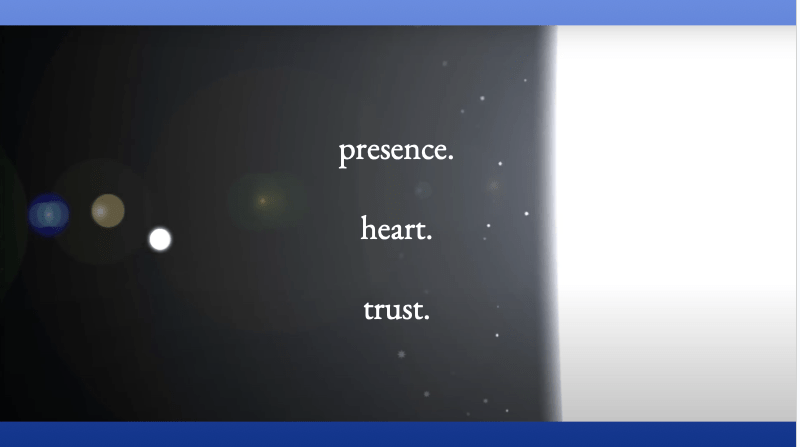
I know it can be hard to concentrate on prayer. Staying in God’s presence, listening for His heart, and trusting Him is hard. Silence is a choice. Noise is the default. But don’t try to stop your mind from wandering. A wandering mind in prayer is actually a good thing. We are performing when we force ourselves to stop thinking about the things He wants us to bring to Him.
If there’s something that you have in your heart and mind, that just won’t go away when you stop to pray, lift it up to God. He wants to hear.
If we seek to find God, we will find Him.
Jeremiah 29:13
If we look for Him, He is there.
“Prayer does not change God, it changes us. It deepens insight, increases intuitive perception, expands consciousness. It transforms personality.
Wilford Peterson
Have a God-Given Purpose
So what do we do with all of that information? Sin is the problem, the law shows us it, and Christ is the solution. Anyone can be saved, and if we’re saved we get freedom from our sinful nature, the world, and Satan, and the freedom to know God and connect with Him. But where do we fall in all that, what is our purpose?
ANAVAH
3Our purpose is to be humble. Ok, I know what you’re probably thinking, that word is kind of archaic, I haven’t heard anyone use it in a while–don’t worry, we’ll get into it.
The Bible talks about humility in a couple of different places. James 4:10 says “Humble yourselves before the Lord, and He will exalt you.” and in Matthew 5:5 “Blessed are the humble, for they shall inherit the earth.”
This passage from Matthew is where we find the Hebrew word for humility–Anavah. Anavah means to occupy your God-given space in the world, and we can think about it like a circle.

Imagine this circle is your life, every aspect of it, from school to family life to work. Sometimes we try to extend our reach to stuff outside of our circle, like past mistakes, how others feel about us, the color of our skin, rude comments, where we were born, and what others have done to us.

ANAVAH is the place that we control. When we try to reach outside of our circle of control, we are being arrogant. By trying to control it, we are saying that we should be in control of others’ circles. When we try to control how people feel about us, we are saying that we should get to control their circle. When we complain about the weather or the world, we are saying that we think we should be in control of God’s circle. Arrogance is not ANAVAH.

When we don’t fill our circle, we are being timid. We don’t think that we should take up space, or even try to reach our full potential. Timid people have given up on expanding as a person. Now don’t confuse being timid with being an introvert. Introverts and extroverts can both be timid in their own respect. Being timid is being too scared to take a risk on yourself and improve in ways you never thought possible. Timidity is not ANAVAH.

Stuff that’s inside our circle of control includes first and foremost, ourselves, then our choices, responses, and attitudes. What if I told you that no one can make you angry or sad? No really, you are the one who can make yourself angry or sad. Think about it, when your mom is yelling at you, gets a phone call and immediately her anger is gone, but as soon as she hangs up, she’s angry again, that’s because she is using her anger as a tool. Not that she isn’t justified, because the trash hasn’t been taken out for two weeks, but it is a means of getting your attention. It’s something that can be controlled.
When we can recognize that indeed, we are in control of ourselves, our moods, our actions, and our thoughts, we can begin to experience ANAVAH, the true humility that Jesus talked about.
True Humility Is Not Thinking Less of Yourself, It’s Thinking of Yourself Less.
C. S. Lewis
You don’t have to dull down your talents or think of yourself as less than. Anavah is reaching out to the edges of your circle, stretching to find our talents and developing them to the fullest. But anavah is using those talents to build up the people around you, not for just your own benefit.
Occupying your God-given space in the world is acting as Jesus did. Fully loving God and fully loving people. We are no longer bound to selfish desires, our old self.
Ephesians 2:17-24 talks about this. Starting at verse 17–
So I tell you this, and insist on it in the Lord, that you must no longer live as the Gentiles do, in the futility of their thinking. They are darkened in their understanding and separated from the life of God because of the ignorance that is in them due to the hardening of their hearts. Having lost all sensitivity, they have given themselves over to sensuality so as to indulge in every kind of impurity, and they are full of greed.
That, however, is not the way of life you learned when you heard about Christ and were taught in him in accordance with the truth that is in Jesus. You were taught, with regard to your former way of life, to put off your old self, which is being corrupted by its deceitful desires; to be made new in the attitude of your minds; and to put on the new self, created to be like God in true righteousness and holiness.
The thing you need to do most is love God. Love your neighbor. Love others.
Love is patient, love is kind. It does not envy, it does not boast, it is not proud. It does not dishonor others, it is not self-seeking, it is not easily angered, it keeps no record of wrongs. Love does not delight in evil but rejoices with the truth. It always protects, always trusts, always hopes, always perseveres. Love never fails. But where there are prophecies, they will cease; where there are tongues, they will be stilled; where there is knowledge, it will pass away.
1 Corinthians 13:4-8
Love is sharing a God too good to be kept secret.
My hope is that when I die,
All of hell rejoices
That I am out of the fight.
C. S. Lewis
Final Thoughts
4Christ saved us, everything we need, our future, our death, and our resurrection are all wrapped up in Him. Then He goes, “Ok, this is what I need you to do. I need you to look at me, and who I am. Reflect that to one another and the world, so that they too can be liberated from the pains and slavery of Satan and their sin. That’s the purpose of your life now. To love others as I love you.”
Ephesians 5:1 Follow God’s example, therefore, as dearly loved children and walk in the way of love, just as Christ loved us and gave himself up for us as a fragrant offering and sacrifice to God. For you were once darkness, but now you are light in the Lord. Live as children of light (for the fruit of the light consists in all goodness, righteousness, and truth) and find out what pleases the Lord.
Citations
 Genuine Gwyn
Leave a comment